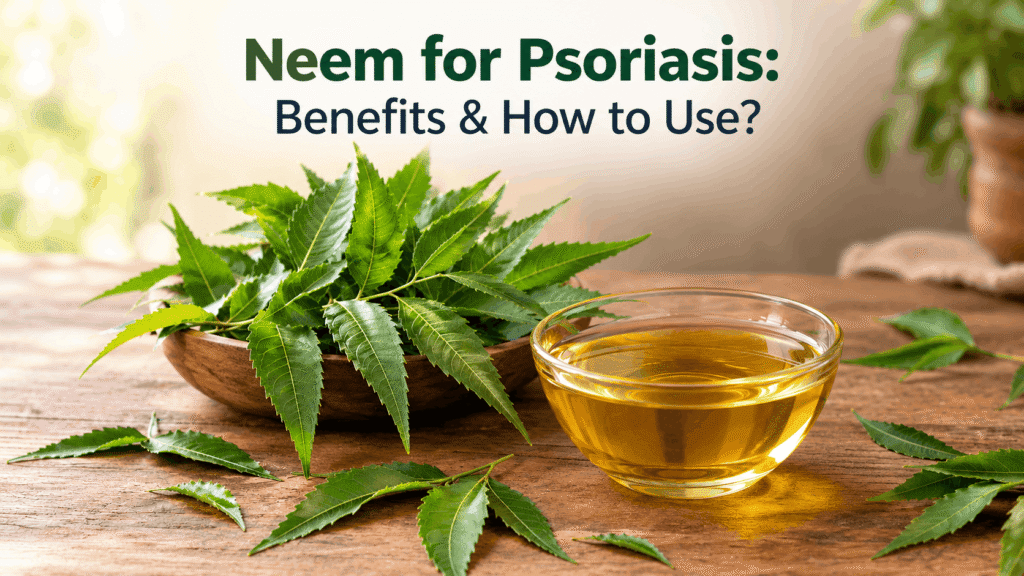
Neem for Psoriasis : Benefits & How to Use
Neem (Azadirachta indica) is one of the most valued herbs in Ayurveda for managing psoriasis. Its anti-inflammatory, antimicrobial and immunomodulatory properties may help reduce scaling, calm redness and prevent secondary infections on psoriasis-prone skin. Neem oil can be applied topically, neem leaf paste used as a soothing pack, and neem-based internal preparations taken under practitioner guidance. While neem is not a standalone treatment for psoriasis, it is a useful supportive tool within a broader Ayurvedic care plan.
Introduction
Neem, known as Nimba in Ayurveda, has been a cornerstone of traditional Indian skin care for thousands of years. If you live with psoriasis, you have probably heard that neem can help. But how exactly does it work, what is the best way to use it, and are there any precautions?
This guide covers the key benefits of neem for psoriasis, practical ways to use neem oil and neem paste, internal preparations, and what the available evidence says.
Why Neem for Psoriasis?
Psoriasis is a chronic autoimmune condition that speeds up the life cycle of skin cells, leading to thick, scaly patches that can itch, crack and sometimes bleed. While there is no permanent cure, the goal is long-term relief and fewer flare-ups.
In Ayurveda, neem is classified as tikta (bitter) and kashaya (astringent) with a cooling potency. These properties make it especially suitable for Pitta- and Kapha-related skin conditions, which is how psoriasis (Ek-Kushtha) is traditionally understood. Modern research supports several mechanisms that explain why neem is considered helpful.
Key Benefits of Neem for Psoriasis
Anti-inflammatory action. Compounds such as nimbidin, nimbin and azadirachtin in neem have been shown to reduce inflammatory markers. For psoriasis, this may translate to less redness, less swelling and calmer skin.
Antimicrobial protection. Psoriasis patches, particularly in skin folds, are prone to secondary bacterial and fungal infections. Neem’s broad-spectrum antimicrobial activity helps keep these at bay, which is especially important during the humid monsoon months.
Immunomodulatory support. Early studies suggest that neem can modulate certain immune pathways. Since psoriasis involves an overactive immune response, this property is of particular interest to researchers.
Moisturising and barrier support. Neem oil is rich in fatty acids (oleic, stearic, linoleic) that help soften dry, thickened plaques and support the skin’s natural barrier, which is often compromised in psoriasis.
Itch relief. The cooling nature of neem, combined with its anti-inflammatory action, often provides noticeable relief from the persistent itching that accompanies psoriasis.
Neem Oil for Psoriasis: Topical Use
Neem oil is the most common way to use neem on psoriasis-prone skin. Here is how to use it safely:
- Patch test first. Apply a small amount of diluted neem oil to your inner forearm. Wait 24 hours. If there is no redness or irritation, proceed.
- Dilute before applying. Mix 5 to 10 drops of cold-pressed neem oil into a tablespoon of a carrier oil such as coconut oil or sesame oil. Pure neem oil is potent and can irritate sensitive or broken skin.
- Apply to affected areas. Gently massage the diluted oil onto psoriasis patches. Leave it on for 30 to 60 minutes, or overnight if your skin tolerates it well.
- Rinse with lukewarm water. Use a mild, fragrance-free cleanser. Pat dry gently; never rub psoriasis-affected skin.
- For scalp psoriasis, warm the diluted neem oil blend slightly, part your hair into sections, and apply directly to the scalp. Leave it on for at least 30 minutes before washing with a gentle shampoo. You can learn more about caring for your scalp in our guide to Ayurvedic scalp psoriasis treatment.
Stop guessing with home remedies. Get a customized, ayurvedic specialist-guided neem treatment plan tailored to your body type.
Neem Paste for Psoriasis
A neem leaf paste can be used as a soothing pack for localised plaques:
Take a handful of fresh neem leaves and grind them with a small amount of water to form a smooth paste. You can add a teaspoon of turmeric powder for additional anti-inflammatory support. Apply the paste to affected areas, leave it on for 15 to 20 minutes, then rinse with cool or lukewarm water.
If fresh neem leaves are not available, neem leaf powder (available at most Ayurvedic shops) mixed with water or rose water works as an alternative.
This is a gentle, traditional approach that many patients find soothing, though results vary from person to person.
Internal Use of Neem and Precautions
In Ayurveda, neem is also used internally, typically as neem capsules, neem juice (neem swarasa), or as part of formulations like Nimbadi Churna. Internal use is believed to support blood purification (Rakta Shodhana) and help address the systemic imbalance behind psoriasis.
Important precautions:
- Always consult a qualified Ayurvedic practitioner before taking neem internally. Self-medication can lead to adverse effects.
- Neem may lower blood sugar, so people with diabetes or those on blood-sugar-lowering medication should use it only under medical supervision.
- Pregnant and breastfeeding women should avoid internal neem use.
- Internal neem preparations should not be used continuously for long periods without practitioner guidance.
- Neem supports your overall treatment but is not a replacement for a comprehensive management plan. If you are looking for a structured approach, you may want to explore how Ayurvedic psoriasis medicines work to restore skin health as part of a broader protocol.
What Does the Evidence Say?
Several in-vitro and animal studies have demonstrated neem’s anti-inflammatory and immunomodulatory properties. A 2019 review in the Journal of Clinical and Aesthetic Dermatology noted that neem extracts showed promise in reducing inflammatory skin responses. However, large-scale human clinical trials specifically on neem for psoriasis remain limited.
The existing evidence supports neem as a useful complementary tool, not a standalone treatment. This aligns with how Ayurvedic practitioners typically use neem: as one part of a holistic protocol that includes diet, lifestyle changes and other therapies.
How Dr. Ambalkar's ARC Uses Neem in Psoriasis Care
At Dr. Ambalkar’s Ayurvedic Research Centre in Vasai – Mumbai, neem is one of several herbs integrated into personalised treatment plans. Rather than prescribing neem in isolation, the clinic uses it alongside other classical Ayurvedic psoriasis treatment approaches, including Panchakarma detox therapies, dietary modifications (Pathya-Apathya) and stress management guidance.
The specific neem preparation, dosage and application method are tailored to each patient’s Prakriti (constitution), the type and severity of their psoriasis and any co-existing conditions. This personalised approach is central to Ayurveda and is why self-prescribing a single herb rarely delivers the results that guided care can
- Neem has anti-inflammatory, antimicrobial and immunomodulatory properties that may help manage psoriasis symptoms.
- Neem oil should be diluted in a carrier oil and patch-tested before applying to psoriasis patches.
- Neem leaf paste offers a gentle, traditional option for localised soothing.
- Internal neem use requires qualified practitioner guidance; never self-medicate.
- Neem works best as part of a holistic Ayurvedic protocol, not as a standalone remedy.
- Evidence is promising but limited; large-scale clinical trials on neem for psoriasis are still needed.
Combine the soothing power of neem with Dr. Ambalkar’s clinical Ayurvedic protocols for clear, healthy skin.
Frequently Asked Questions
1. Is neem oil good for psoriasis?
Neem oil has anti-inflammatory and moisturising properties that may help soothe psoriasis patches, reduce scaling and relieve itching. It works best as a supportive measure within a broader treatment plan, not as a standalone remedy.
2. Can I apply neem oil directly on psoriasis patches?
It is best to dilute neem oil in a carrier oil such as coconut or sesame oil before applying it. Pure neem oil is potent and can irritate broken or sensitive skin. Always do a patch test first.
3. Can neem cure psoriasis permanently?
No single herb, including neem, can cure psoriasis permanently. Psoriasis is a chronic condition. However, neem may help manage symptoms and reduce flare-ups when used as part of an Ayurvedic treatment plan focused on long-term relief.
4. Is it safe to take neem internally for psoriasis?
Neem can be taken internally in certain Ayurvedic formulations, but only under the guidance of a qualified practitioner. It may interact with blood-sugar-lowering medications and is not suitable during pregnancy or breastfeeding.
5. Can I use neem for scalp psoriasis?
Yes. Diluted neem oil can be massaged into the scalp, left on for 30 minutes or longer, and then washed out with a gentle shampoo. It may help soften scales and reduce itching on the scalp.

Dr. Pramod Ambalkar is an expert Ayurvedic physician and founder of Dr. Ambalkar's Ayurvedic Research Centre (ARC) in Vasai. With 25+ years focused on the Ayurvedic management of psoriasis and chronic skin conditions, he helps patients across the Mumbai Metropolitan Region soothe symptoms and reduce flares through personalised, root-cause care.


