
Monsoon Skin Care for Psoriasis : A Gentle Routine to Calm Flare-Ups
Monsoon humidity, trapped sweat and less sunlight can trigger psoriasis flares especially in skin folds. To care for psoriasis-prone skin in the rainy season, cleanse gently with lukewarm water, pat folds completely dry, switch to a lighter moisturiser, wear breathable cotton and watch for fungal infections that can mimic psoriasis patches.
Introduction
The arrival of the monsoon is a relief from the heat – but for anyone living with psoriasis, the damp, humid weeks ahead can be a quietly difficult season. Sticky air, sweat trapped against the skin and a higher risk of infection can all nudge calm skin towards a flare. The good news is that a few thoughtful changes to your monsoon skin care habits can make a real difference. This guide walks you through a gentle, psoriasis-friendly routine for the rainy season, with practical tips suited to Mumbai’s climate.
Why The Monsoon Affects Psoriasis
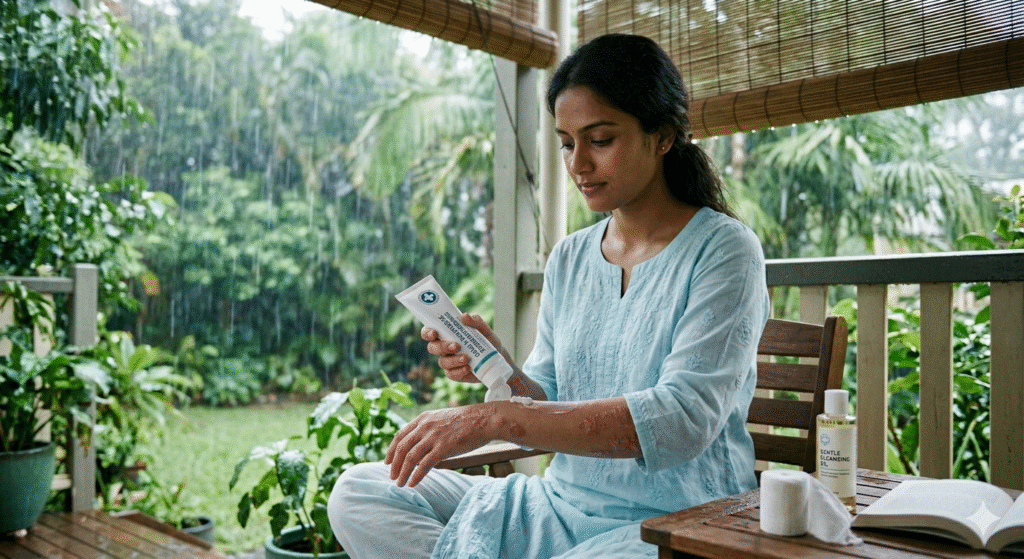
Psoriasis is sensitive to its environment and the monsoon brings several triggers at once. The constant humidity keeps skin damp, while sudden swings between air-conditioned rooms and muggy streets stress the skin barrier. Cloudy days also mean less sunlight – and moderate sun exposure is something many people with psoriasis find soothing. Add the seasonal dip in mood and disrupted routines that long rainy spells can bring and stress (a well-known psoriasis trigger) often climbs too. None of this means a flare is inevitable, but it does mean your skin needs a little more attention than usual.
Humidity, Sweat And Inverse Flares
The biggest monsoon challenge is moisture sitting on the skin. Sweat and humidity collect in body folds – under the arms, beneath the breasts, around the groin and the belly. For people prone to inverse psoriasis, these warm, damp areas can become irritated, red and sore. Trapped moisture softens and breaks down the skin (maceration), making patches more reactive and uncomfortable. Friction from wet clothing rubbing against these areas can also aggravate existing plaques. Keeping folds clean and crucially, dry is one of the most effective things you can do all season.
25+ years of Ayurvedic psoriasis care
At Dr. Ambalkar's Ayurvedic Research Centre, we help patients across the Mumbai Metropolitan Region manage flares through every season. Reach out and let's calm your skin this monsoon →
Clothing, Footwear And Daily Habits
What you wear shapes how your skin copes with the monsoon skin care challenge. Choose loose, breathable cotton over synthetic fabrics that trap sweat, and if you’re rethinking your wardrobe for sensitive skin, our guide to clothing and styling during psoriasis is a helpful place to start. Carry a spare set of clothes during heavy-rain days so you can change out of anything wet quickly. Dry your footwear properly and avoid wearing damp shoes, which encourage fungal growth around the feet and toenails. Keep nails trimmed and clean to reduce damage from scratching, and wash bedding and towels regularly so they dry fully rather than staying musty.
Ayurvedic Monsoon Care
In Ayurveda, the monsoon is a season when Vata tends to become aggravated and digestion (Agni) weakens, which can reflect on the skin. Supportive seasonal habits include eating warm, light, freshly cooked meals and going easy on heavy, oily, fermented or leftover foods that are harder to digest. Staying well hydrated with warm water, getting steady sleep and protecting your routine against monsoon-season stress all help keep the body in balance. A gentle, doctor-guided application of suitable medicated oils may also be advised for some people – but in damp weather this should be tailored to you rather than self-prescribed, as the wrong approach can leave skin too occluded.
Monsoon Skin Care Tips For Psoriasis In Mumbai
Mumbai and the wider MMR see some of the most intense, prolonged humidity in the country, so a few local monsoon skin care tips go a long way:
- Run a fan or dehumidifier indoors to cut the dampness that lingers in homes through the season.
- Keep a small towel handy on commutes to dab off rain and sweat quickly.
- Don’t sit for hours in wet socks or damp clothing after a waterlogged commute.
- Watch fold areas closely in the first heavy weeks of rain, when flares tend to begin.
When To See A Specialist
If your patches spread quickly, start to ooze or smell, become very painful or you can’t tell whether you’re dealing with psoriasis or an infection, it’s time for a professional assessment. At Dr. Ambalkar’s Ayurvedic Research Centre in Vasai, our team can help you tell the two apart and build a monsoon-ready plan suited to your skin. If the rainy season is consistently setting off your psoriasis, book a consultation before the next downpour.
Monsoon Psoriasis Care : Key Takeaways
– Humidity and sweat in skin folds are the main monsoon triggers – keep folds clean and dry.
– Damp skin invites fungal infections that look like psoriasis; if a patch changes or weeps, get it checked.
– Keep moisturising, but a lighter formula feels better than heavy ointment in humid weather.
– Choose loose cotton over synthetics and change quickly out of wet or sweaty clothes.
– In Mumbai’s MMR humidity, a fan or dehumidifier indoors helps reduce dampness.
Get monsoon-ready before the next downpour!
If the rainy season keeps setting off your psoriasis, you don't have to ride it out alone. We'll build a gentle, monsoon-ready plan suited to your skin and Mumbai's climate. Book a consultation at our Vasai clinic → +91 93201 93201
Frequently Asked Questions
1. Does the monsoon make psoriasis worse?
It can. High humidity, trapped sweat, less sunlight and seasonal stress are all common triggers and damp skin folds are especially prone to irritation. With a gentle routine, many people keep their skin settled through the season.
2. How should I change my skincare routine during the monsoon if I have psoriasis?
Cleanse gently with lukewarm water, pat skin (especially folds) completely dry, switch to a lighter humectant-based moisturiser applied right after bathing and change out of wet or sweaty clothes promptly.
3. Can monsoon humidity cause fungal infections on psoriasis patches?
Yes. Warm, damp skin encourages fungal infections, which can look like psoriasis and can also trigger new patches through skin irritation. If a patch changes or weeps, get it assessed rather than self-treating.
4. What fabrics are best for psoriasis in the rainy season?
Loose, breathable cotton is ideal. Avoid tight synthetic fabrics that trap sweat against the skin and change quickly out of anything that gets wet.
5. Should I still moisturise in humid monsoon weather?
Yes – keep moisturising, but a lighter formula often feels more comfortable than a heavy ointment in humidity. Heavier creams still help on dry spots like elbows and knees.

Dr. Pramod Ambalkar is an expert Ayurvedic physician and founder of Dr. Ambalkar's Ayurvedic Research Centre (ARC) in Vasai. With 25+ years focused on the Ayurvedic management of psoriasis and chronic skin conditions, he helps patients across the Mumbai Metropolitan Region soothe symptoms and reduce flares through personalised, root-cause care.


