Understanding Erythrodermic Psoriasis and Ayurvedic Treatment Options in Goregaon
What is Erythrodermic Psoriasis?

Erythrodermic psoriasis is a rare, severe, and potentially life-threatening form of psoriasis that affects nearly the entire surface of the body. Unlike other types of psoriasis which typically manifest as localized red, scaly patches, erythrodermic psoriasis causes widespread redness and shedding of skin over large areas, often more than 75-90% of the body. The skin may appear bright red, inflamed, and feel hot to the touch, resembling a severe burn. This extensive inflammation can disrupt the body's natural temperature regulation and fluid balance, leading to significant discomfort and serious complications. It can develop gradually in individuals with pre-existing chronic plaque psoriasis, or it can appear suddenly, even in those with no prior history of psoriasis. Due to its severity, erythrodermic psoriasis often requires prompt medical attention and a comprehensive treatment approach. In Goregaon, individuals exploring holistic options might consider Ayurvedic treatments that focus on internal balance and skin nourishment to manage such challenging conditions.
Symptoms of Erythrodermic Psoriasis
The symptoms of erythrodermic psoriasis are distinct and severe, often affecting the majority of the body's skin surface. The most prominent symptom is widespread, intense redness and inflammation across large areas of the skin, often covering 75% or more of the body. This redness is usually accompanied by significant peeling or shedding of the skin in sheets, rather than small flakes. The skin may feel extremely hot and tender to the touch, resembling a severe burn, and can be intensely itchy and painful. Patients often experience severe discomfort, burning sensations, and tightness of the skin. Other common symptoms include generalized swelling, particularly in the hands and feet, and enlarged lymph nodes. Systemic symptoms can also arise due to the body's efforts to cope with the widespread inflammation, such as fever, chills, and fatigue. Nail changes, including thickening, pitting, and discoloration, are also frequently observed. These symptoms collectively indicate a severe disruption of the skin's barrier function and can significantly impact a person's quality of life, requiring careful management, which can be explored through various treatment modalities in clinics across Goregaon.
Causes of Erythrodermic Psoriasis
The exact cause of erythrodermic psoriasis is not fully understood, but it is believed to result from a combination of genetic predisposition and environmental triggers, similar to other forms of psoriasis. In many cases, it develops in individuals who already have chronic plaque psoriasis, often due to an uncontrolled flare-up or sudden withdrawal of systemic psoriasis medications like corticosteroids. Other potential triggers include severe sunburn, certain infections, allergic reactions to medications, or excessive alcohol consumption. Stress and emotional trauma are also recognized as possible exacerbating factors. While not contagious, the condition represents an extreme immune system response where skin cells grow too rapidly. Understanding these potential triggers is crucial for managing the condition and exploring holistic approaches, such as Ayurvedic treatments offered in Goregaon, which aim to address underlying imbalances.
Risk of Erythrodermic Psoriasis
Erythrodermic psoriasis carries several significant health risks due to the extensive skin inflammation and disruption of normal bodily functions.
- **Fluid and Electrolyte Imbalance:** The widespread skin damage can lead to excessive fluid loss and electrolyte disturbances, potentially causing dehydration and affecting organ function.
- **Temperature Dysregulation:** The compromised skin barrier makes it difficult for the body to regulate its temperature, leading to hypothermia (low body temperature) or hyperthermia (high body temperature).
- **Secondary Infections:** The raw, damaged skin is highly susceptible to bacterial, viral, or fungal infections, which can worsen the condition and lead to sepsis if untreated.
- **Heart Failure:** The increased blood flow to the inflamed skin can put a significant strain on the heart, potentially leading to high-output cardiac failure in severe cases.
- **Protein Loss:** Extensive skin shedding can result in significant protein loss from the body, leading to malnutrition and other systemic complications if not managed appropriately.
Ayurvedic Treatment for Erythrodermic Psoriasis

{{FAQ_A4}}
{{FAQ_A5}}
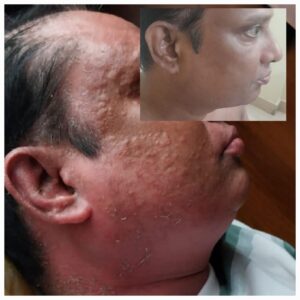
Erythrodermic Psoriasis Treatment Before & After Results