Difference Between Eczema And Psoriasis
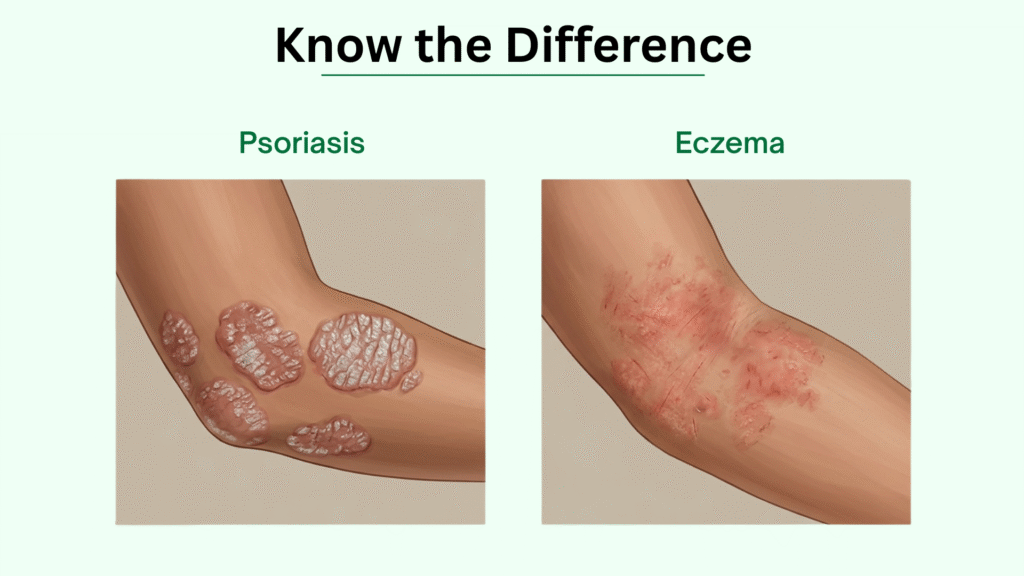
The main difference between eczema and psoriasis is how they look and feel. Psoriasis causes thick, well-defined plaques with silvery scales and mild-to-moderate itch, often on the elbows, knees and scalp. Eczema is usually intensely itchy, red and dry or weepy with less-defined edges and often appears in skin creases. Because treatment differs, an accurate diagnosis matters.
Introduction
If you’ve spotted red, scaly or itchy patches on your skin, you’re probably searching for the difference between eczema and psoriasis. It’s one of the most common skin mix-ups – the two look alike, both are long-term and both flare and settle over time. But in the psoriasis vs eczema question, these are genuinely different conditions with different causes and telling them apart matters, because what soothes one won’t always help the other. This guide covers what each looks like (with pictures), where they appear, how they itch, what triggers them and how Ayurveda treats each
What is Psoriasis?
Psoriasis is a long-term autoimmune condition in which the immune system speeds up the skin’s renewal cycle. Instead of shedding gradually over weeks, skin cells build up within days, forming thick, raised plaques topped with silvery-white scales. It commonly appears on the elbows, knees, lower back and scalp and often shows up symmetrically – both elbows, both knees. Psoriasis isn’t contagious, frequently runs in families and can also affect the nails and, in some people, the joints (psoriatic arthritis).
What is Eczema?
Eczema (atopic dermatitis) is an inflammatory condition linked to a sensitive skin barrier that struggles to hold on to moisture. This leaves skin dry, red and intensely itchy and sometimes weepy or crusted where it’s been scratched. It’s often part of the wider “atopic” picture alongside asthma and hay fever and frequently begins in childhood. Eczema tends to settle in the bends of the elbows and knees and on the wrists, neck and face.
25+ years of Ayurvedic psoriasis care
At Dr. Ambalkar's Ayurvedic Research Centre, we help patients across the Mumbai Metropolitan Region tell psoriasis and eczema apart and treat each at the root. Not sure which one you have? Let's find out. →
Pictures of Psoriasis and Eczema : What Each Looks Like
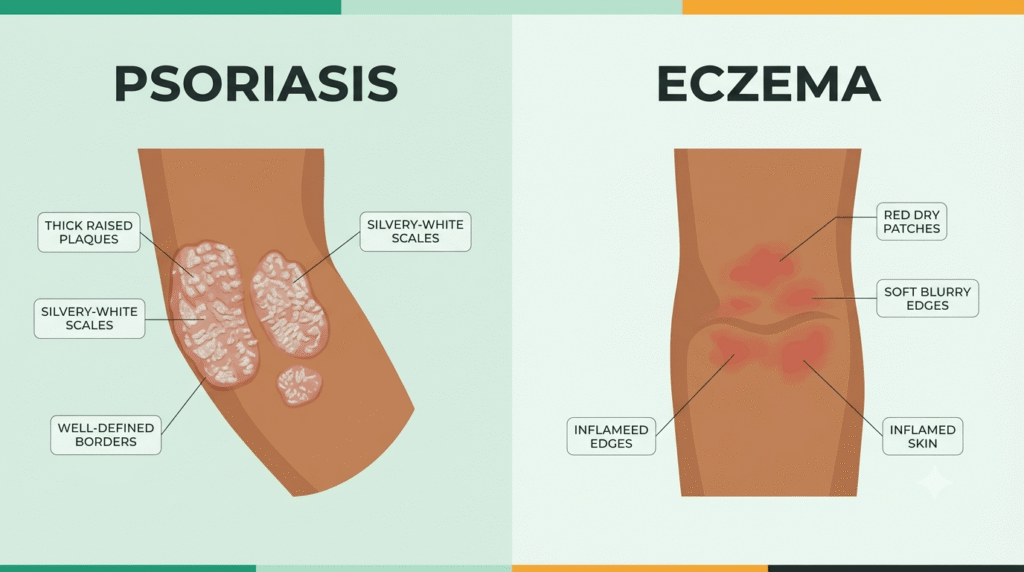
One reason people search for pictures of psoriasis and eczema is that the visual differences are often the fastest way to tell them apart. The two biggest visual clues are the scale and the edges.
Psoriasis plaques are thick, sharply defined and topped with dry, silvery-white scale. If a scale is knocked off, you may see tiny pinpoint spots of bleeding – a classic psoriasis sign. The patches feel raised and almost leathery and sit clearly above the surrounding skin.
Eczema patches, by contrast, look red and inflamed with less-defined, blurry edges. Rather than thick silvery scale, eczema is more likely to ooze, weep or crust and the skin often appears dry, cracked or raw from scratching. In short: psoriasis tends to look thick, silvery and well-bordered, while eczema looks rawer, redder and more irritated. The comparison table below sets these side by side.
The Difference Between Eczema And Psoriasis At A Glance
Here’s the difference between eczema and psoriasis summarised across the features that matter most:
| Feature | Psoriasis | Eczema |
|---|---|---|
| What it is | Autoimmune; speeds up skin-cell turnover | Inflammatory; sensitive, dry skin barrier |
| Appearance | Thick, well-defined plaques with silvery scale | Red, inflamed, less-defined; may weep or crust |
| Itch | Mild to moderate; can burn or feel sore | Often intense and relentless |
| Common areas | Elbows, knees, scalp, lower back, nails | Inner elbows/knees, wrists, neck, face |
| Typical onset | Late teens to mid-30s | Infancy or early childhood |
| Common triggers | Stress, infection, injury, cold/dry weather | Irritants, allergens, soaps, sweat, dry air |
How To Differentiate Between Psoriasis And Eczema
Beyond appearance, three everyday clues help you differentiate between psoriasis and eczema – where the patches sit, how they itch and what sets them off.
By location on the body. Psoriasis favours the outer surfaces – the fronts of the knees, backs of the elbows, the scalp, lower back and nails. Eczema favours the inner creases – the insides of the elbows and knees, the wrists, ankles, neck and around the eyes. There’s some overlap (both can affect the scalp and hands), but this “outer-surface versus skin-crease” pattern is one clinicians rely on heavily.
By itch intensity. Both itch, but eczema is usually the more relentless, intense itch – often called “the itch that rashes,” because scratching itself worsens the rash. Psoriasis can itch too, though many people describe burning or soreness as much as itch. If the overwhelming feature is a maddening urge to scratch in the skin creases, eczema is more likely.
By triggers. Psoriasis flares are commonly set off by stress, infections (a strep throat can trigger guttate psoriasis), skin injury, cold dry weather, smoking and certain medications. Eczema flares are more often driven by contact irritants and allergens – harsh soaps and detergents, dust, pet dander, certain fabrics, sweat and dry air.
By age of onset. Eczema most often begins in infancy or early childhood. Psoriasis usually makes its first appearance between the late teens and mid-thirties, with a smaller second peak later in life. Age alone isn’t definitive, but a history stretching back to babyhood leans towards eczema, while a first appearance in young adulthood leans towards psoriasis.
Why An Accurate Diagnosis Matters
Because the two look similar but respond to different care, guessing can mean months of following the wrong routine and occasionally, mistaking a fungal infection for either one. A short assessment with an experienced practitioner can settle which condition you’re dealing with and set you on the right path from the start.
Psoriasis or Eczema?
Get an accurate diagnosis first. Book a Skin Assessment at our Vasai clinic.
The Ayurvedic Approach To Psoriasis And Eczema
In Ayurveda, both conditions are understood as internal imbalances that surface through the skin but the emphasis differs. Psoriasis is often linked to aggravated Vata and Kapha with accumulated toxins (ama), and an ayurvedic psoriasis treatment aims at this root rather than only calming the surface through personalised diet, suitable detox therapies (Panchakarma where appropriate), medicated applications and lifestyle adjustments. Eczema frequently involves more of a Pitta-Kapha pattern with heat and oozing, so an ayurvedic treatment for eczema follows a different plan matched to your constitution. Because the internal picture is different, an eczema plan won’t mirror a psoriasis plan which is exactly why an individual assessment matters more than a one-size-fits-all remedy.
When To See A Doctor
If patches are spreading, very itchy or sore, disturbing your sleep, or you simply can’t tell which condition you’re dealing with, it’s worth having it assessed rather than self-treating. An ayurvedic specialist can confirm the diagnosis, rule out look-alikes and build a plan suited to your skin. At Dr. Ambalkar’s Ayurvedic Research Centre in Vasai, our team can help you tell the two apart and curate a plan suited to your skin.
- The key difference between eczema and psoriasis: psoriasis brings thick, silvery, well-defined plaques on outer surfaces (elbows, knees, scalp) eczema brings red, dry or weepy patches in skin creases.
- Eczema is usually the more intensely itchy of the two; psoriasis may burn or feel sore.
- Eczema often starts in childhood; psoriasis usually first appears in young adulthood.
- Different triggers and different internal patterns mean the two need different care – so an accurate diagnosis comes first.
- Ayurveda treats each individually, targeting the root imbalance rather than only the surface.
Frequently Asked Questions
1. What is the main difference between eczema and psoriasis?
Psoriasis produces thick, silvery, well-defined plaques often on the elbows, knees and scalp from an overactive immune response. Eczema is intensely itchy, red and dry or weepy, with less-defined edges and usually appears in skin creases.
2. How do you differentiate between psoriasis and eczema?
Look at three things: location (psoriasis on outer surfaces, eczema in skin creases), itch (eczema is usually more intense) and triggers. Appearance helps too – psoriasis has a silvery scale, eczema tends to weep or crust. A practitioner can confirm it.
3. Can you have both psoriasis and eczema?
Yes, though it’s uncommon. A practitioner can distinguish the two and identify whether both are present, which helps in planning the right care for each.
4. Is psoriasis or eczema more itchy?
Eczema is usually the more intensely itchy of the two. Psoriasis can itch as well, but many people describe burning or soreness rather than a relentless itch.
5. Does Ayurveda treat psoriasis and eczema differently?
Yes. Although both are skin conditions, their internal patterns differ, so Ayurvedic care is personalized diet, therapies and applications are tailored to the specific condition and the individual.

Dr. Pramod Ambalkar is an expert Ayurvedic physician and founder of Dr. Ambalkar's Ayurvedic Research Centre (ARC) in Vasai. With 25+ years focused on the Ayurvedic management of psoriasis and chronic skin conditions, he helps patients across the Mumbai Metropolitan Region soothe symptoms and reduce flares through personalised, root-cause care.


